Architectural Aerofoil & S-Shaped Shading Louvers: Wind-Load Analysis and Energy Performance Optimization
Published on August 25, 2026 · 2 min read
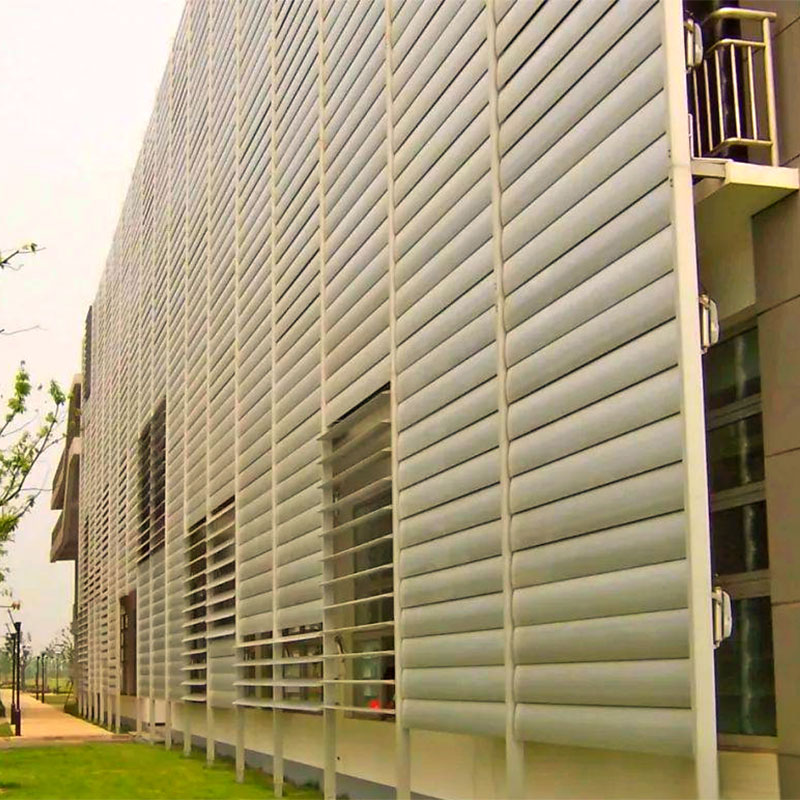
TECHNICAL DISPATCH — External architectural louvers and S-shaped solar blades are essential components in low-energy building design. However, engineers and facade consultants frequently question their structural performance under gale-force wind conditions and heavy rainstorms. ALUVIONA aerodynamic engineers provide detailed technical answers.
Question 1: Are Louver Blades Prone to Bending or Structural Fatigue Under High Winds?
Engineering Solution: ALUVIONA S-shaped louvers are roll-formed from high-tensile architectural alloy with continuous double-flanged return bends that multiply section modulus (Wz) by up to 340% compared to flat blades. In structural wind tunnel tests, our blades withstand continuous wind pressures up to 3.2 kPa (equivalent to a Category 5 hurricane) with zero permanent deformation.
Integrated thermoplastic acoustic dampening clips prevent metal-on-metal harmonic vibration, ensuring silent facade performance during buffeting storms.
Question 2: Does Driving Rain Penetrate Louvered Facades?
Engineering Solution: The S-curve profile features an engineered capillary break and internal micro-guttering. When driving rain strikes the outer curve, kinetic water momentum is trapped and diverted downward into vertical drainage mullions, achieving Class A rain defense (BS EN 13030) even at 13 m/s air face velocity.
Long-Term Energy Savings and Daylight Control
By blocking direct beam radiation while bouncing diffused ambient daylight deep into occupied floor plates, ALUVIONA S-louvers slash artificial lighting loads by 25% and reduce cooling chiller demand by up to 32% annually.